Tuesday, 13 August 2013

The Solemnity of the Assumption of the Blessed Virgin Mary into Heaven

The Assumption of the Blessed Virgin Mary into Heaven


The experiences in my faith journey leave me astounded even now, because the whole process of awakening to God's love in my life, has truly been awesome! God's grace and my own admiration of Mary, our Blessed Mother, led me on in my search for a deeper meaning in life. This Thursday we will be celebrating a wonderful feast of Mary's Assumption into heaven. She was a model disciple open to God's grace. The feast celebrates the special place that Mary has in the life of the Church. This place is first of all defined by her being chosen to be the mother of Jesus, his only human parent. This alone gives her a uniqueness which is shared by no other person who has ever lived. By her assumption, we can understand that Mary, because of the dignity of her motherhood and her own personal submission to God's will at every stage of her life, takes precedence over everyone in the sharing of God's glory which is the destiny of all of us who die united with Christ her son.

The pope declared that the Assumption of the Blessed Virgin Mary should be treated as a dogma of the church in 1950. The Pope defined the Assumption of Mary to be the dogma of faith: "We pronounce, declare and define it to be a divinely revealed dogma that the Immaculate Mother of God, the ever Virgin Mary, having completed the course of her earthly life, was assumed body and soul to heavenly glory."  In the Roman Catholic Church, the dogma means an article of faith revealed by God, which the magisterium  of the church presents as necessary to be believed. Now, one may ask what is the significance of the date? What happen prior to 1950? Yes, World War II had just ended lest than 10 years ago. Nevertheless, the whole Europe and many parts of Asia and North Africa were still in ruins. It was only after the war that the people came to know the extent of atrocities committed. Million of people were dead, either victims of fighting or the result of the concentration camps. More were dying due to the lack of amenities, nutrition and shelter. Although the Germans in Europe and the Japanese in Asia were defeated, there was a general feeling of hopelessness.

The questions asked were these: Where was God when all of this happened? Is there to this human life of suffering? Is human life precious and valuable? What must we do in the face of overwhelming evil?
We can find the answer from the dogma of the Assumption. The dogma and the Feast of the Assumption was, above all, a message of HOPE. It is hope especially for those who seem hopeless. It is hope for those who are weak. It is hope for those who seem to be overwhelmed by the power of evil. It is hope for those who are close to defeat and failure. It is hope for those who have suffered much.

In the first reading, we see the vision of the writer of the book of Apocalypse with the encouraging words to the listeners who remain loyal to God. Here we hear of a woman, clothed with the sun, with the moon under her feet, and on her head a crown of twelve starts, associating her with realm of God. She gave birth to a son who is to rule all the nations with a rod of iron. These words are symbolic, meaning that Jesus gloriously resurrected and He now rules at the right hand of the Heavenly Father. Then again there is the symbol of the great dragon with seven heads and ten horns, signifying the evil and is always eager to destroy the good and perpetuate the evil. The woman symbolized in Mary and there is the promise of salvation in the world and the full authority of Christ. The reading also tell us of her struggle, Her vulnerable position is made worse by the fact that she is in labour. We have also picture of the fearsome of dragon. The dragon towers over the woman. It appears that nothing can withstand the power of the dragon. But God intervenes. God saves the woman and allows her to bring a child into this world- a simple child who will be the real ruler of the universe and not the dragon. At the moment when all appeared to be lost, at the moment of certain defeat, God ensures victory for those who are weak and afflicted.

The Second reading taken from the letter to the Corinthians, Paul tells us that by his glorious resurrection Christ became the first fruit of those who have fallen asleep. Mary is the first to benefit completely by her assumption. Paul again tells us that all the enemies have been destroyed and God has put them under his feet. The last enemy to be destroyed is death and hence it is the victory for the pure and innocent life lived and this is justified is Mary the Immaculate one. When Adam disobeyed God in the Garden of Eden, he lost his inheritance to eternal life and death came to human race. Through his Resurrection Christ brought life to the world. Indeed, Christ is the first one to enjoy a glorious resurrection and is the cause of the resurrection of all. It is only through the church and the Sacrament of Baptism that we receive our new creation, our new heart and spirit of the godly seed, as our assurance of eternal life in the Kingdom of God. Mary through her assumption is the first to enjoy the fullness of his saving activity. Adam brought death into the world through his sin and Jesus brought life through his sinless life. Mary is now body and soul with Christ in Heaven.


The Gospel begins with the story of Mary's visit her cousin, Elizabeth, when both were pregnant with divine grace and were expecting their first child. Both the woman are bearing in their wombs children who when grown up will change the course of world events. The entire encounter is filled with urgency and joy. The story contains most of the elements which contribute to the status we give to Mary in our Church. We have Mary who soon after the Annunciation goes to see Elizabeth and John (still in his mother's womb). Already in the womb, Jesus is showing that urge to serve rather than be served. In Mary we see her true nature to serve and she shows her concern towards Elizabeth. As soon as Mary greets Elizabeth, two things happen:

First, at the presence of Jesus and his mother, the child in Elizabeth's womb jumps for joy.

Second, Elizabeth, in turn, recognizes the special position of Mary and her Son: filled with the Holy Spirit, she called Mary the "Mother of my Lord." She is aware of what has taken place in Mary. She also says, "Blessed are you among women and blessed is the fruit of your womb."

Elizabeth deeply moved that is it Jesus and his Mother have come to her and says "how is that the mother of my Lord comes to me?" Further she praises Mary for she had unconditionally accepted to submit to God's plan.

Mary's response is the Magnificat, the song of thanksgiving and her own hymn of praise. Mary praises and thanks God for allowing her to be a privileges servant of God. She also sings of how God will defend the cause of the weak and defeat the powers of the world: "He has pulled down princes from their thrones and exalted the lowly. The hungry he has filled with good things, the rich sent empty away."

Today we may be in the midst of a difficult situation, we may be facing a problem that seems so huge. Today, we may be ready to give up in the face of failure. Today, we may feel that our voice cannot be heard because we are a minority living in the country. Today, the darkness and evil of the world may seem so overwhelming that there appears to be no way out. Yet, today, on this Feast of the Assumption, we are reminded that the power of God is much greater than any of these things. Evil and death can crush the body, but it cannot crush the soul. Others may take away our external freedom, the freedom to speak out, freedom to change our religion. However, they cannot take away our inner freedom, the freedom of conscience. Problems may threaten us from every angle, but problems cannot overcome us.

Today, we echo the hope of Mary in affirming the greatness of God- this is the God, who according to St. Paul, will put all his enemies including death under his feet.

Pope Emeritus Benedict XVI tells us that the Feast of the Assumption is a day of joy because God has won, Love has won, and it has won life. Love has shown that is it stronger than death, that God possesses the true strength and that his strength is goodness and love. Mary was taken up body and soul into heaven: There is  even room in God for the body. Heaven is no longer a very remote sphere unknown to us. We have a Mother in heaven. And the Mother of God, the Mother of the Son of God, is our Mother.

Mary is a sure sign of hope. What the Lord has done for Mary, the mother of the Church, He will do for us, the members of the Church. There is hope, a great and glorious hope. No matter how earth-bound, sin-bound, and death-bound we seem, we can give our lives to Jesus and fly away. We will not only fly like the eagle (see Is 40:31) but also like Mary. In Jesus, "we shall overcome one day." Mary has proven it. Believe! Hope! Fly!


Friday, 9 August 2013

Why should I go to confession?

"Why should I go to confession? My non-Catholic friends tell me they're forgiven by praying directly to God; Why aren't Catholics? And if I do have to go, how often?" This is a question I have been asked several times over the years by my non-catholic and non-christian friends. Confession is one of the least understood of the sacraments of the Catholic Church. In reconciling us to God, it is a great source of grace, and Catholics are encouraged to take advantage of it often.


To understand why confession is important for Catholics, let us first understand how the church look at this sacrament. Confession is the Sacrament of Penance, one of the seven sacraments recognized by the Catholic Church. Catholics believe that all of the sacraments were instituted by Jesus Christ himself. In the case of confession, that institution occurred on Easter Sunday, when Christ first appeared to the apostles after his Resurrection. Breathing on them, he said: "Receive the Holy Spirit. For those whose sin you forgive, they are forgiven; for those whose sins you retain, they are retained" (John 20: 22-23). You might be wondering what is the Sacraments mean to the Catholic Church. Sacraments are an outward sign of an inward grace. Since we are talking confession here, the outward sign is the absolution, or forgiveness of sins, that the priest grants to the penitent(the person confessing his/her sins); the inward grace is the reconciliation of the penitent to God.

The purpose of confession is to reconciling man to God. When we sin, we deprive ourselves of God's grace. And by doing so, we make it even easier to sin more. The only way out of this downward cycle is to acknowledge our sins, to repent of them, and to ask God's forgiveness. Then, in the Sacrament of confession, grace can be restored to our souls, and we can once again resist sin.

When we sins, we are not only hurting the relationship with God, it also injured the entire church-----------the body of Christ. I guess the first and biggest misconception we have seems to revolve around the idea that sin is somehow just about "me and God." However, we fail to recognized that humans are communal creatures and everything we do good or bad, reaches out and touches someone. Perhaps, the best analogy is to think of sin as a wild dog that we cut loose in a room full of people. Someone is going to get bitten and we have no control over that once the dog has gotten loose.

The most obvious example of this is in the basis of what we believe: We were all condemned by the sin of Adam and all saved by the obedience of Jesus. Beyond that, on a personal and practical level, let's think of how someone else's sin can change our day and the way we relate the rest of that day. We can look at the example of our lives. Just few years back, the high school where I studied before, we lost a student and his mom to a drunken driver. How tragic and horrible is that? The world was robbed on that day of gifts, talents and love of two beautiful human beings because of one man's sin. The effects of that are obvious.

Now, before we fall into any kind of self-righteous rage, how about our sins? How about gossip? That little tidbit you passed along to your friend about that guy or girl at your workplace? What were the effects of that? Do you ever wonder? Were there any positive ones? We even sometimes go so far as to try to call it something like "venting," so that it sounds healthy instead of sick. What a mess that can make! We've all been victims and we know how impossible gossip is to fight; yet we don't hesitate to pass along the bad news and our speculations about other people. The effects of just that one sin can really cause a world of damage and take people away from each other.

Using that example, we can see how that sin is never "just between God and me." It's between the wounded person, the whole world and me. The easiest response to this is to feel despair, but we've got good news that trumps all the bad. That is where confession comes into picture. God offers us a remedy and a beautiful one at that: The Sacrament of reconciliation. 

We go to reconciliation because we acknowledge that our sin is communal and God's mercy is boundless.He forgives us  for the horror that we inflict on his creation, whether we meant to or not. Not only that, but God offers it freely and with joy. Wow, awesome right?

Another great reason for us to go to the sacrament of reconciliation is because we are, ultimately, physical creatures. We were created with a need to see, to hear and to touch. I can sit here in my room and remind myself that I am forgiven, but when someone else, someone that I trust, someone representing Christ in the Church, tells me "God forgives you freely," there's some real power to that. We are all aware of our own ability to deceive ourselves, but the priest in the confessional has nothing to gain by lying to us about forgiveness. The conviction in his voice alone can, at times, be a big part of the healing.

As a personal testimony, I have to tell you that regular confession has changed my life. I'm learning more and more how deep the sin in my life goes. That sounds depressing or sad, but it's not. Connected to that knowledge is the realization that I am forgiven. More and more, I see that reconciliation is all about maintain my relationship with Jesus and allowing Him to remove everything that blocks me from receiving God's love.

So, with all that in mind, how often should you go? The church law is a little bit generous on this, so we'll have to look at it a couple ways. First of all, we are require to confess any serious sins at least once a year, so there is that. And it is recommended that we also confess our venial sins. But, beyond that, if we want to receive Holy Communion ( The Body and Blood of Christ), we need to make sure that if we have committed any mortal sins, first we need to go for confession.

Enjoy another day in God's presence!  Jesus loves you.


Monday, 29 July 2013

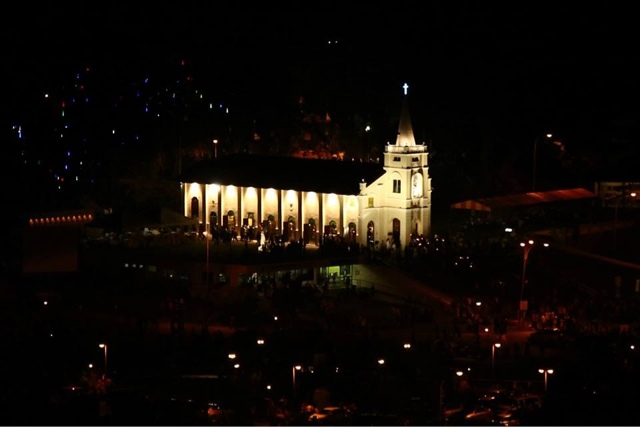
St. Anne's Church - 125 years


St.Anne's Shrine 


Statue of St.Anne with the Blessed Virgin Mary


Blessed Sacrament 


Procession


The crowd


Sunday, 28 July 2013

Lord, teach us how to pray?

I was once the president of the catholic society (now consider myself as the advisor to the society) in my campus. All of us (the members and I) will meet up every week to have prayers & devotion( eg: rosary, novena to the mother of perpetual help). Before we start our meeting on a particular day, usually, we will start it with an opening prayer. I think most of the students don't really like to lead in prayer, regardless of whether that is an opening prayer or closing prayer. The reason being is that most of us do not know what to pray or what to say in front of the crowd. Same like me, as a facilitator, when I first stand in front of the crowd to lead in prayer. I think most of us are facing the same problem together with the disciples in those day. we have the same commonality that "WE DO NOT KNOW HOW TO PRAY". Precisely, I guess most of us do not know what is the correct word that we should utter or using in our prayer. We want to pray, but how can we pray?

In today's gospel," Jesus was praying in a certain place, and when he had finished, one of his disciples said to him,
“Lord, teach us to pray just as John taught his disciples.”  He said to them, “When you pray, say:Father, hallowed be your name, your kingdom come.
Give us each day our daily bread
and forgive us our sins for we ourselves forgive everyone in debt to us,
and do not subject us to the final test.” (LK11:1-4)

When Jesus taught his disciples to pray he gave them the disciple's prayer, what we call the Our Father or Lord's Prayer. What does Jesus' prayer tell us about God and about ourselves? First, it tells us that God is both Father in being the Creator and Author of all that he has made, the first origin of everything and transcendent authority, and he is eternally Father by his relationship to his only begotten Son who, reciprocally is Son only in relation to his Father (Matthew 11:27). All fatherhood and motherhood is derived from him (Ephesians 3:14-15). In the Lord Jesus Christ we are spiritually reborn and made new, and we become the adopted children of God (John 1:12-13; 3:3).

Jesus teaches us to address God as "our Father" and to confidently ask him for the things we need to live as his sons and daughters. We can approach God our Father with confidence and boldness because Jesus Christ has opened the way to heaven for us through his death and resurrection. When we ask God for help, he fortunately does not give us what we deserve. Instead, he responds with grace and mercy. He is kind and forgiving towards us and he expects us to treat our neighbor the same. We can pray with expectant faith because our heavenly Father loves us and treats us as his children. He delights to give us what is good. His love and grace transforms us and makes us like himself. Through his grace and power we can love and serve one another as Jesus taught with grace, mercy, and loving-kindness. 

Now, do you treat others as they deserve, or do you treat them as the Lord would with grace and mercy? Jesus' prayer includes an injunction that we must ask God to forgive us in proportion as we forgive those who have wronged us. Are you ready to forgive as Jesus forgives?

If a neighbor can be imposed upon and coerced into giving bread in the middle of the night, will not God, our heavenly Father and provider, also treat us with kind  and generous care no matter how troubling or inconvenient the circumstances might appear? Jesus states emphatically, How much more will the heavenly Father give! St. Augustine of Hippo (340-425 AD) reminds us that "God, who does not sleep and who awakens us from sleep that we may ask, gives much more graciously." The Lord Jesus assures us that we can bring our needs to our heavenly Father who is always ready to give not only what we need, but more than we can ask. God gives the best he has. He freely pours out the blessing of his Holy Spirit upon us so that we may be filled with the abundance of his provision. Do you approach your heavenly Father with confidence in his mercy and kindness towards you?

Pope John Paul II, at the end of his first encyclical letter, The Redeemer of Man, maintained that our prayer must be "great, intense, and growing." He also emphasized that the Lord wants our prayer to be combined with fasting, for the Lord has decided at this time to make prayer and fasting the first and most effective weapons against our culture of death (The Gospel of Life, 100). According to these criteria, is your prayer life satisfactory to the Lord?

To pray as the Lord wants us to pray, we must see God as our loving Father. That is the first thing Jesus taught us about prayer (see Lk 11:2). We must be aware that our Father sees our prayer and fasting (Mt 6:6, 18). Abraham stopped short in his prayer for the cities of Sodom and Gomorrah to be spared destruction. His prayer was limited because he:

  • wasn't sure whether God was just (see Gn 18:25),
  • was even less sure of God's mercy, and
  • projected his own interior conflicts onto God and thereby accused God of being impatient (Gn 18:30) and angry (Gn 18:32).

Abraham had little concept of God being a loving Father, and he prayed and did not pray accordingly.

We who are in Christ can and must pray always with loving, tender confidence in our Father. In that way, we will pray as we ought (Rm 8:26).

Wednesday, 24 July 2013

God Compassionate love for all person


Prayer Service: In Loving Memory of our Departed Brother, Brian Lim Beng Choon

For an economic student, the term “opportunity cost” is one of the most familiar term that we use throughout our degree study in university. Consider this as a technical term or not, the meaning of opportunity cost, simply put, it refers to the second best alternative that we have to forgo in effect of choosing the first best alternative. Basically, this is the term used in decision making. For me, this term is also applicable in life, apart from our decision making in an organization. We can either choose God, whom bring life to us and lead us to a happy joy or the devil that brings ultimate destruction that lead us to death. If one were to choose, as the term opportunity cost here suggest by choosing the best alternative, we as a human, we will definitely choose God that send us abundant blessing.

Recall Satan’s promise to Eve when he tempted her to disobey God and eat the forbidden fruit: “For God knows that when you eat of it your eyes will be opened, and you will be like God, knowing good and evil” (Gen. 3:5). “That is,” the tempter was saying, “you can decide for yourself what is good and what is evil. You can be your own boss.” This is the sin of pride: the illusion of self-sufficiency, the illusion that a person can be his own source of his fulfillment. This is the root of all sin.


We are living in this secular world, the world that blur our vision of God. Religion might not be the first priority in life as a young adult like me, what concerns me the most, perhaps, getting a good job with a good salary, good wife—beautiful, nice body & etc may be at the top of the list. However, we fail to recognize the relationship that we should have in life, that is the life with God, our creator. We fail to recognize that He can provide everything that we need in life. He is our creator, He create us out of His abundant love and blessings, of course, He also know that what we need in our life.


One may ask how can we deepen our relationship with God? The answer is simple: PRAYER. Prayer is the best way that we can communicate with God. We can leave all our sorrow to God, I guess this is the best way to deal with our inner feelings that make us feel so depress in life.


Today, as we pray for our brother who had passed away last week, it is also re-awakening for each one of us the importance of relationship. The importance of reaching out the love, the abundant blessing that we received from the lord, to the people out there. What is the greatest commandment of the Lord? I guess most of you would know the greatest command is “Love your God with all your heart and with all your being, with all your strength and with all your mind, and love your neighbour as yourself” (Lk10: 27-28).


In today's gospel on the Gospel reading of the Prodigal son, The Parable of the Prodigal Son is probably the best-known and most-loved of all of Jesus’ parables. It has been called “the pearl and crown of all the parables of Scripture.” It has even received the title Evangelium in Evangelio, “the Gospel within the Gospel.” Together let’s savor some of its richness. The younger of two sons asked for his share of his father’s property (Lk. 15:11–12). We know from Deuteronomy 21:17 that under Jewish law, the younger brother’s share would be half of what the elder brother would receive. This request by the younger son expresses a desire that has plagued us human beings from the beginning. I mean the desire for independence from God, the desire to be in charge of one’s own life.


That’s how it is with us and God. By His creation, God gives us a free will. When we begin to think we want to be free from God’s service and find our liberty somewhere else, God lets us make that vain attempt. Eventually we learn that in turning from God’s will we inevitably become slaves of our own selfish desires. Our God-given free will gives us our grandeur, but our misuse of that free will gives us our misery. Immediately, it seems, the younger son went into “a far country” and spent all he had. For us, says St. Augustine, “the far country” is forgetfulness of God. In the slavery of his own desires, the younger son used up all his resources in a vain attempt to find happiness.

A famine arose in that country, and the younger son was broke and hungry (Lk. 15:14) That prodigal son’s suffering in that far country is itself a parable of the suffering which sin always brings.
And then the man “came to himself”—opened his eyes to the truth about himself (Lk. 15:17).When we come to our true selves, the selves God created us to be, we have to come to God through His Son. As the Second Vatican Council reminds us, “Christ the Lord, . . . in the very revelation of the mystery of the Father and of his love, fully reveals man to himself and brings to light his most high calling” (Constitution on the Church in the Modern World, no. 22). Having come to his senses, the prodigal son decided to return to his father (Lk. 15:18). Why would he dare go back home? Probably because he knew he had once been a member of that family, and perhaps still was. When you and I turn away from our sin and back to God, we know we shall not be rejected. At our baptism we were adopted as sons and daughters of God, and nothing—not even our worst sins—can cancel that adoption.

Notice that the father welcomed back the prodigal son even before the son made his confession. Imagine the son’s surprise. And imagine his immediate awareness of how totally undeserving he was of such mercy! In our return to the Father, the more we receive his love, the more grievously do we look on our sins. Repentance is a continuing process: As we grow in understanding God’s forgiving love, we mourn that we have sinned against that love. When the saints urge us to bemoan our sins, they’re not talking about remorse—”why did I do such a thing?” No, indeed! Bemoaning our sins means sorrowing because of the suffering our sins inflicted on our Lord Jesus on the Cross. The more we know and love our Lord Jesus, the more we despise our sins.


The Church proclaims this parable to us, not to entertain us, but to hold up a mirror to us. Let us now reflect, in the prodigal son, can we see an image of ourselves? Who of us has not turned away from the Father? Who of us has not put great distance between ourselves and the Father, by our sins? Or take the scornful, self-righteous, unforgiving elder brother. Who of us has not harshly judged persons who grievously distort their own lives? Who of us has not withheld forgiveness—or at least been reluctant to grant it—to those who need our forgiveness?


In these and countless other ways, you and I too often wander off into far country and squander or grossly misuse God’s good gifts. That’s what sin is.

God grant that every time we go away from God, we will accept His grace to come to ourselves. Come to our senses, and turn back to the Father. His Son has made it perfectly clear that the Father is always waiting for us, always watching for us, infinitely eager to welcome us back home.


Saturday, 20 July 2013

"Ignorance of scripture is ignorant of Christ"

Last Sunday we celebrated bible Sunday. In today's world,  reading the Bible may not seem as attractive or enticing as reading a best selling novel.  This beautiful event reminds me a beautiful quote stated by St. Jerome, which he once said " ignorance of scripture is ignorance of Christ." Saint Jerome is the doctor of the church where the church remembered for his great work in translating the bible into Latin, the edition known as vulgate. I guess for many people, the thought of reading the bible from cover to cover comes across as a daunting task. As a young adult like me, my enthusiasm was slowly waning as I found it more difficult to understand the Old Testament. I have heard over the years that other people also faced similar hurdles.

In the past, there were few opportunities for the laity to attend bible study. But, today there is a renewed desire to know the Word of God seeing that there are many programmes like prayer meeting that we have each week in our campus, faith formation in our parish, bible knowledge for school goers. Even though these programmes have rekindled the desire in many to understand better out scriptures, those attending are still only a fraction of the general catholic population in our campus. 

Programme organizer might be wondering why is it that people are not rushing to understand the scriptures. I guess many do not see the need to read or even study the Word of God and choose to remain ignorant.

This is a very sad reality that probably captures the general apathy shown by many Catholics. This lack of knowledge is also seen when many "good" Catholics give up their faith when challenged by Bible weilding Christians or other faith believer for that matter.

I guess one of the reason why many Catholics throw in the towel easily is because they do not realize that we Catholics actually quote scripture all the time. Yes, nearly everything we say at Mass has its roots in sacred scripture. When we attend mass, we hear a reading from the Old Testament, we recite or sing one of the Psalms; we listen to a reading from the Epistles and followed by a Gospel reading. The whole structure fits together so that the Eucharistic service is focused on Christ in the Gospels. The church's liturgical calendar follows three years cycle of scripture reading. So a catholic who goes to church faithfully will have heard almost the entire bible read over the three years.

Furthermore, the responses, and the words of the communion service are almost all from scripture. So a church going catholic does know and use scriptures for their primary meditation and worship (ps.119:48), but they failed to recognize that it also act as a personal information and instruction for life. Even our catholic doctrines and moral teachings are biblically based and permeated and upheld with scripture. We need to understand the scriptures better to see how our faith is rooted and grounded in the bible.

Pope Francis once said, "to live according to the Gospel is to fight against selfishness. The Gospel is forgiveness and peace; it is love that comes from God."

So don't be ignorant, read and understand the Bible.


Monday, 15 July 2013

Sharing is Caring

"Sharing is Caring" This quote might sound familiar to you. We can share things in many ways. Sometimes we can share it verbally or non-verbal. Both ways seem fine for me. Writing is one of the non-verbal communication for me to convey a message to the audience that I'm dealing with. Now, writing has become part of my life, is just like someone who like to keep a diary of their own, in which each of the events in his or her life can be recorded through words. A friend of mine once ask me this, why do you like to write? Don't you feel bored when you write? I guess his meaning was I need to crack my head and think something to write, and I will get exhausted soon! Well, this is hobby my friend. I like to write and I like to share. I strongly believe that writing can share some of the experiences that you and I might face in life. 

Writing is never tired! yes, sometimes I might run out of topic even if I feel like writing something. I guess that is part of the obstacle that I face as a blog writer. I doesn't mean that everyone might experience the same situation like me, but it might applicable for some writers who are just like me. 

If you have been reading and following my blog, I guess you know that lately I will share more on my belief. The belief that I'm having now. The belief that I can express it in words. The belief that I can share and express it through words. Awesome right? Often, the power of words can bring you a great imagination. 

To further analyst on writing a blog and a diary, one might differentiate it by saying blog is a public thing, which everyone can read, comments or even quote you for saying something. Well, sometimes we must be careful on what we are writing and saying, of course, I don't share anything private about me and sensitive issue for that matter. I'll share something in general. 

Writing is never tired for me. However, Writing has given me an opportunity to share! To share something in general, to share something people are discussing or we known it as a hot topic issue, because I recognize the fact that "Sharing is Caring".